
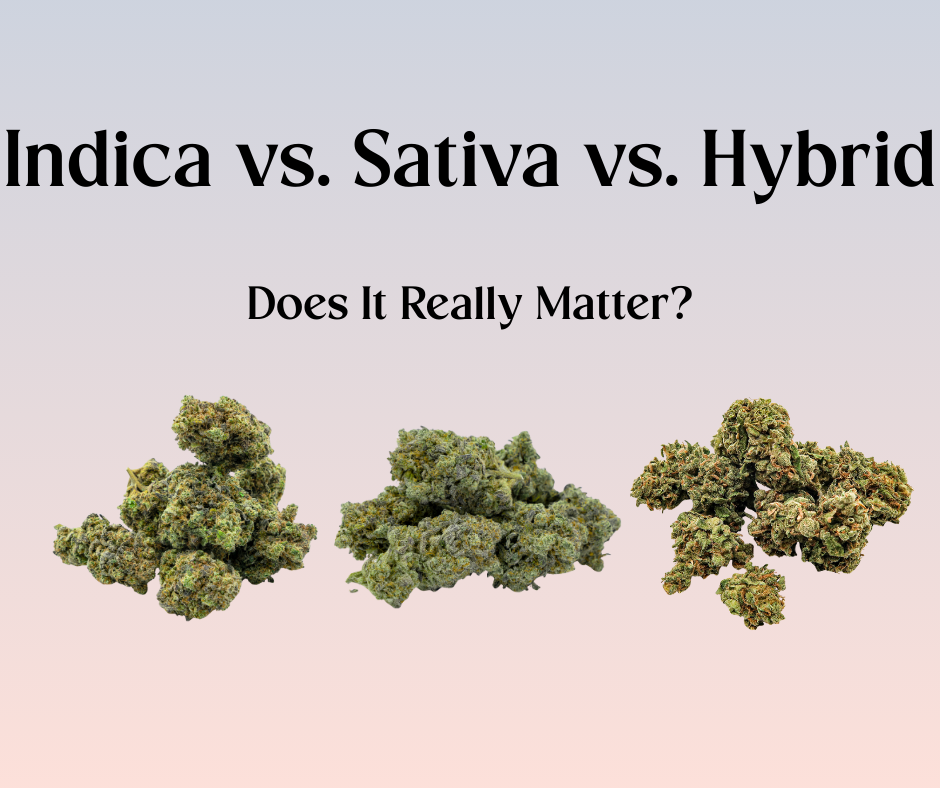
Why chemovars, cannabinoid ratios, and terpene profiles tell you more (plus real-world case studies from Chill, Stimulate, and Innovate).
Disclaimer: This content is for informational purposes only and does not replace medical advice. Consult a licensed healthcare professional for questions about cannabis use and health.
TL;DR (for the skimmers)
Those classic labels—indica, sativa, hybrid—don’t reliably predict how you’ll feel. What matters more are a product’s cannabinoid ratios (like CBD:THC/THCa) and terpene profile (the aromatic compounds shaping aroma and effects). Science shows market labels often miss the underlying chemistry, while terpenes and cannabinoids working together—the Ensemble Effect—better explain the experience. Our CraftCanna Chill, Stimulate, and Innovate pre-rolls are designed with consistent doses and distinct terpene leads to make choosing effects simple and reproducible.
The myth: “Indica for couch-lock, sativa for energy, hybrid for in-between.”
These categories are everywhere. But multiple large studies show they’re poor predictors of a product’s actual chemical makeup—and therefore of your experience. In a peer-reviewed analysis of ~90,000 samples across six U.S. markets, researchers found that commercial labels “do not consistently align with the observed chemical diversity.” In plain English: the label rarely matches the chemistry. Smith et al., 2022
A university summary of that work put it bluntly: labels like indica, sativa, and hybrid “tell consumers little about what’s in their product.” The same report called for a cannabis “nutrition-facts-style” panel highlighting cannabinoids and terpenes. (Marshall, 2022; Marshall, 2025)
Genetics research points the same way. Several studies show no clear genetic boundary among retail products marketed as indica vs. sativa, even though hemp vs. drug-type cannabis does separate genetically. That means the classic categories don’t line up neatly with DNA or with the compounds that shape effects. (Schwabe et al., 2024; Sawler et al., 2015)
Bottom line: The name on the jar isn’t the story. The chemistry is.
The fix: Shop by chemovars, not folklore
A chemovar is a chemical variety defined by its measured cannabinoid and terpene profile. That big 2022 dataset found three common terpene families among legal-market flower:
- Caryophyllene + limonene
- Myrcene + pinene
- Terpinolene + myrcene
These groupings had real clustering in the lab data—unlike “indica vs. sativa.” Smith et al., 2022
What this means for you: Read the cannabinoid ratio (especially CBD relative to THC/THCa) and the primary terpenes. Those two details will do more to predict the feel than any marketing label.
Cannabinoids set the volume and Terpenes tune the mood to create the perfectVIBE.
Think of cannabinoids as the volume knob. THC (formed when THCa is heated) drives intoxication; CBD can shape comfort and reduce some unwanted effects for some people at certain ratios. Terpenes are the equalizer—modulating qualities like clarity, calm, creativity, and how the aroma comes through. (Sommano et al., 2020; Smith et al., 2022)
A quick science digest
- THCa → THC with heat. When you spark a pre-roll, THCa decarboxylates to THC, which is what most people feel. Smith et al., 2022
- CBD may moderate THC’s rough edges—for some, at certain doses/ratios. Controlled human studies suggest higher CBD:THC ratios can reduce acute anxiety- and psychosis-like symptoms from THC compared with low-CBD cannabis. Not every study agrees, but the trend is promising. (Englund et al., 2012; Liechtenstein et al., 2022 Englund et al., 2023)
- Terpenes matter.
- Myrcene is repeatedly linked with sedative qualities and “couch-lock” at higher concentrations. Surendran et al., 2021
- Pinene appears neuroactive in models tied to attention and memory. (Lee et al., 2017; Allenspach and Sawer, 2021)
- Limonene has emerging human evidence suggesting it can mitigate THC-induced anxiety at specific doses and ratios. It’s early days, but it’s intriguing. Spindle et al., 2024
The Ensemble Effect is the idea that the whole plant (total cannabinoids + terpenes) together feel different than cannabinoids alone. Current reviews see supportive signals, alongside calls for more controlled human trials. André et al., 2024
Case studies: Chill, Stimulate, Innovate (why they feel different)
CraftCanna designs pre-rolls around consistent doses and purpose-built terpene blends, so you can choose effects with fewer surprises. Here’s how the chemistry guides the feel:
Chill — Calm, cozy, and restorative
- Cannabinoids: Built for comfort with a higher CBD and gentler THCa dose per pre-roll.
- Lead terpenes: Myrcene, pinene, β-caryophyllene, humulene.
- Flavor: Ripe blueberry, soft cookie, sweet pine.
- Why it works: The CBD-forward ratio aims to soften THC’s edges, while myrcene and humulene lean soothing. Caryophyllene’s CB2 action adds a grounded body feel for many. Effects vary by person, but Chill is our go-to for relaxing nights. (Englund et al., 2023; Surendran et al., 2021)
Stimulate — Social uplift with focus
- Cannabinoids: Balanced THCa with meaningful CBD per pre-roll.
- Lead terpenes: Myrcene, β-caryophyllene, pinene, limonene.
- Flavor: Sweet pineapple, fresh citrus, tropical haze.
- Why it works: Many people report bright mood and talkative energy, which aligns with the caryophyllene-limonene + pinene family seen in large datasets. Early human data suggest limonene may blunt THC-induced anxiety at certain amounts; pinene may help keep the headspace crisp. (Smith et al., 2022; Spindle et al., 2024
Innovate — Creative spark with clarity
- Cannabinoids: Same reliable base dosing as Stimulate, so volume stays predictable.
- Lead terpenes: Terpinolene, myrcene, ocimene.
- Flavor: Sour lemon, fresh pine, a hint of sweet gasoline.
- Why it works: That terpinolene + myrcene family shows up as a distinct chemovar cluster in lab-tested markets. Many users describe uplift with a floating, imaginative quality—a classic “creative sprint” combo. As always, individual responses vary. Smith et al., 2022
Consistency note: Each CraftCanna pre-roll is built around measured cannabinoids and terpene ratios, so you’re choosing an effect based on science, not just a legacy label.
How to actually choose your next pre-roll that fits your Vibe
1) Start with the cannabinoid ratio
- Want gentler, more social sessions or fewer jitters? Consider balanced CBD:THC/THCa products. Human trials suggest higher CBD:THC ratios can reduce some acute adverse effects of THC in the lab. Englund et al., 2023
- Want a louder experience? THC-dominant options turn the volume up. Know your tolerance. Hoch et al., 2024
2) Check the lead terpenes
- Myrcene: cozy, heavy, “settle in” at certain doses. Surendran et al., 2021
- Limonene: bright mood; emerging evidence for easing THC-related anxiety. Spindle et al., 2024
- Pinene: crisp, potentially memory-supportive signals in models. Lee et al., 2017
- Caryophyllene: CB2-engaging, body-soothing in preclinical work. Jha et. al., 2021
3) Prefer brands that publish full terpene & cannabinoid panels
Labels should go beyond indica/sativa/hybrid. The science community is literally asking for nutrition-style facts so consumers can match products to desired effects. (Marshall, 2022; Marshall, 2025) CraftCanna’s cannabinoid analytical results are always available. See for yourself
Why labels still mislead (and what to watch for)
- Legacy naming, modern markets. Strain names and categories spread informally for decades. Modern testing shows weak alignment with genetics or chemistry. (Schwabe et al., 2021;Smith et al., 2022)
- Variable cultivation. Environment, curing, and post-harvest handling can shift terpene levels and ratios lot-to-lot. This is another reason to look at the latest lab panel over the label lore. Smith et al., 2022
FAQs
Is “indica” really more sedating?
Sometimes—but not reliably. Sedation is more closely tied to chemistry, especially myrcene levels, your dose, and your own biology. The big datasets don’t find a dependable indica/sativa split in chemistry.(Surendran et al., 2021; Smith et al., 2022)
What’s the Ensemble Effect and does it exist?
It’s the idea that terpenes + cannabinoids together produce different effects than isolated molecules. Reviews and early human studies provide supportive signals, but scientists want more robust clinical trials to define when and how it happens. (Ferber et al., 2020; André et al., 2024)
Does CBD always tame THC?
Not always. Evidence suggests ratio and dose matter, and results vary across studies and among people. Still, several human experiments show that higher CBD:THC formulations can reduce some acute THC-related anxiety like effects compared with THC-alone, leading to a more enjoyable experience. (Englund et al., 2012;Englund et al., 2023)
What’s THCa vs. THC?
THCa is the “raw” form in flower. Heat converts it to THC, which is what you feel acutely. Smoking or vaping does that conversion in real time. Smith et al., 2022
Putting it all together (and why CraftCanna does it this way)
Our view is simple: predictable effects require measurable chemistry. That’s why CraftCanna builds Chill, Stimulate, and Innovate around consistent cannabinoid doses and purpose-selected terpene families. You get a clearer map from terpenes → effect, rather than guessing from a one-word label. And yes, they still taste great: ripe blueberry and pine for Chill, tropical haze for Stimulate, and sour-lemon-meets-pine for Innovate—because great flavor is a key part of the CraftCanna experience.
Ready to choose smarter?
Skip the myth. Stick with the science. If you want relaxed recovery, try Chill. For social energy, go Stimulate. For creative focus, pick Innovate. Explore the CraftCanna Collection and let chemistry guide your vibe.
Find your fit today—shop our terpene-guided pre-rolls and feel the Ensemble Effect for yourself. Then, tell us how each chemovar fits your moments.
References
Allenspach, M., & Steuer, C. (2021). α-Pinene: A never-ending story. Phytochemistry, 190, 112857 https://doi.org/10.1016/j.phytochem.2021.112857
André, R., Gomes, A. P., Pereira-Leite, C., Marques-da-Costa, A., Monteiro Rodrigues, L., Sassano, M., Rijo, P., & Costa, M. D. C. (2024). The Entourage Effect in Cannabis Medicinal Products: A Comprehensive Review. Pharmaceuticals (Basel, Switzerland), 17(11), 1543. https://doi.org/10.3390/ph17111543
Englund A, Morrison PD, Nottage J, et al. (2012). Cannabidiol inhibits THC-elicited paranoid symptoms and hippocampal-dependent memory impairment. Journal of Psychopharmacology. 27(1):19-27. doi:10.1177/0269881112460109
Englund, A., Oliver, D., Chesney, E. et al. (2023). Does cannabidiol make cannabis safer? A randomised, double-blind, cross-over trial of cannabis with four different CBD:THC ratios. Neuropsychopharmacol. 48, 869–876. https://doi.org/10.1038/s41386-022-01478-z
Ferber, S. G., Namdar, D., Hen-Shoval, D., Eger, G., Koltai, H., Shoval, G., Shbiro, L., & Weller, A. (2020). The “Entourage Effect”: Terpenes Coupled with Cannabinoids for the Treatment of Mood Disorders and Anxiety Disorders. Current neuropharmacology, 18(2), 87–96. https://doi.org/10.2174/1570159X17666190903103923
Hoch, E., Volkow, N. D., Friemel, C. M., Lorenzetti, V., Freeman, T. P., & Hall, W. (2025). Cannabis, cannabinoids and health: a review of evidence on risks and medical benefits. European archives of psychiatry and clinical neuroscience, 275(2), 281–292. https://doi.org/10.1007/s00406-024-01880-2
Jha, N. K., Sharma, C., Hashiesh, H. M., Arunachalam, S., Meeran, M. N., Javed, H., Patil, C. R., Goyal, S. N., & Ojha, S. (2021). β-Caryophyllene, A Natural Dietary CB2 Receptor Selective Cannabinoid can be a Candidate to Target the Trinity of Infection, Immunity, and Inflammation in COVID-19. Frontiers in pharmacology, 12, 590201. https://doi.org/10.3389/fphar.2021.590201
Lee, G. Y., Lee, C., Park, G. H., & Jang, J. H. (2017). Amelioration of Scopolamine-Induced Learning and Memory Impairment by α-Pinene in C57BL/6 Mice. Evidence-based complementary and alternative medicine : eCAM, 2017, 4926815. https://doi.org/10.1155/2017/4926815
Lichenstein S. D. (2022). THC, CBD, and Anxiety: A review of recent findings on the anxiolytic and anxiogenic effects of cannabis’ primary cannabinoids. Current addiction reports, 9(4), 473–485. https://doi.org/10.1007/s40429-022-00450-7
Marshall, L. (2022, May 19). What’s in your weed? The label doesn’t tell you much, study suggests. CU Boulder Today. (News summary of Smith et al., 2022). University of Colorado Boulder
Marshall, L. (2025, July 3). Can weed labels be trusted? Study shows it depends on what you’re buying. CU Boulder Today. University of Colorado Boulder
Sawler, J., Stout, J. M., Gardner, K. M., Hudson, D., Vidmar, J., Butler, L., Page, J. E., & Myles, S. (2015). The Genetic Structure of Marijuana and Hemp. PloS one, 10(8), e0133292. https://doi.org/10.1371/journal.pone.0133292
Schwabe, A. L., et al. (2021). Comparative genetic structure of Cannabis sativa (marijuana) and hemp varieties shows lack of indica/sativa separation in retail samples. Frontiers in Plant Science. https://www.frontiersin.org/journals/plant-science/articles/10.3389/fpls.2021.675770
Smith CJ, Vergara D, Keegan B, Jikomes N (2022) The phytochemical diversity of commercial Cannabis in the United States. PLoS ONE 17(5): e0267498. https://doi.org/10.1371/journal.pone.0267498
Sommano, S. R., Chittasupho, C., Ruksiriwanich, W., & Jantrawut, P. (2020). The Cannabis Terpenes. Molecules (Basel, Switzerland), 25(24), 5792. https://doi.org/10.3390/molecules25245792
Spindle, T. R., Zamarripa, C. A., Russo, E., Pollak, L., Bigelow, G., Ward, A. M., Tompson, B., Sempio, C., Shokati, T., Klawitter, J., Christians, U., & Vandrey, R. (2024). Vaporized D-limonene selectively mitigates the acute anxiogenic effects of Δ9-tetrahydrocannabinol in healthy adults who intermittently use cannabis. Drug and alcohol dependence, 257, 111267. https://doi.org/10.1016/j.drugalcdep.2024.111267
Surendran, S., Qassadi, F., Surendran, G., Lilley, D., & Heinrich, M. (2021). Myrcene-What Are the Potential Health Benefits of This Flavouring and Aroma Agent?. Frontiers in nutrition, 8, 699666. https://doi.org/10.3389/fnut.2021.699666
CraftCanna product specifications (cannabinoid and terpene profiles; flavor notes) used for case studies are from internal product documentation.

Leave a Reply