
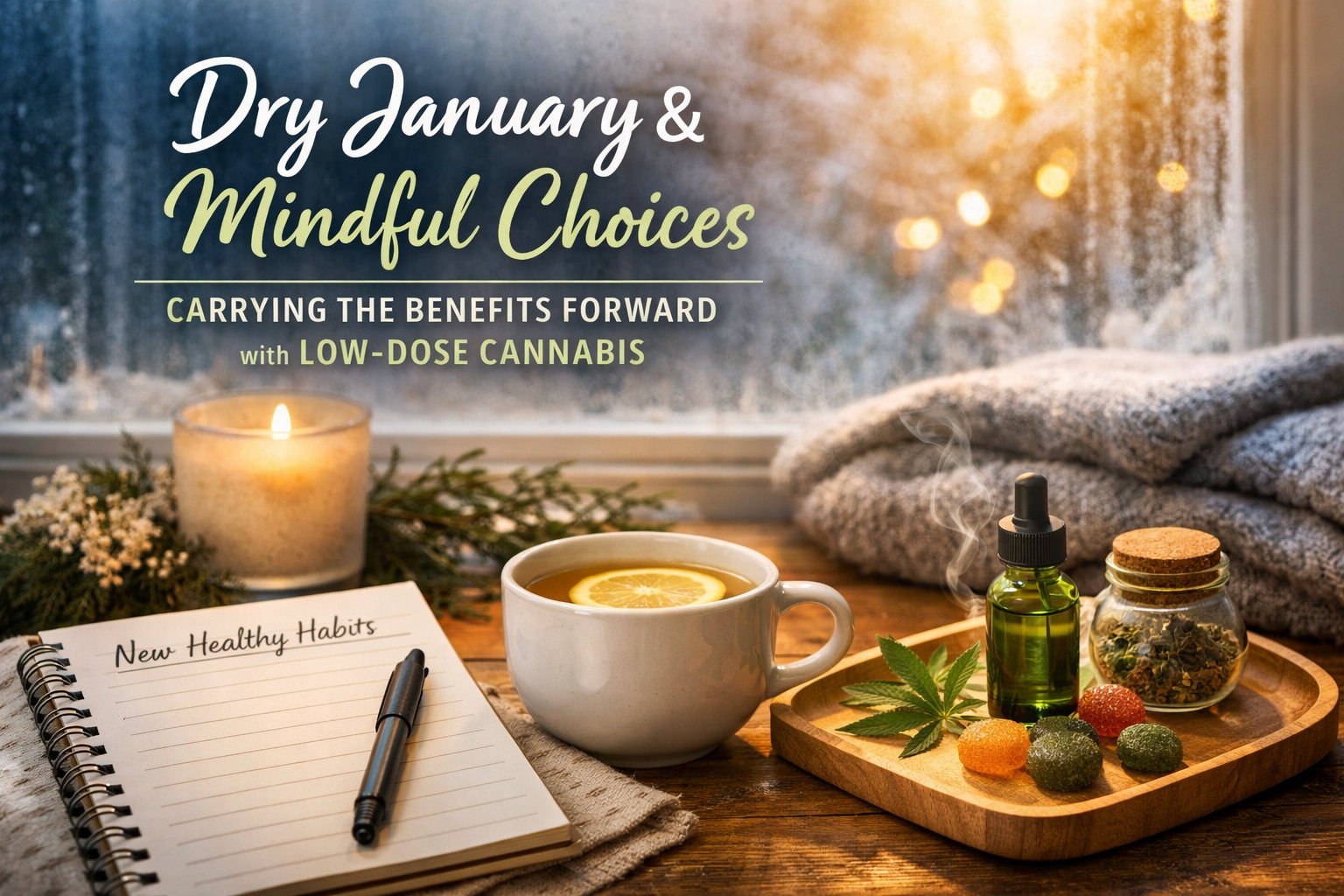
Dry January as the Beginning, Not the Finish Line
Dry January has become more than a one-month challenge. For many people, it serves as a reset point. After the holidays, January offers a chance to slow down, reassess habits, and focus on health. Participants often report noticeable benefits within weeks. Better sleep. Clearer thinking. More consistent energy. Improved mood. These outcomes are not accidental. They reflect what happens when alcohol is removed and routines become more intentional. The real value of Dry January lies in what happens next. The insights gained during the month can shape healthier choices throughout the year. This is where mindful tools, including low-dose cannabis products, can play a supportive role moving forward. Rather than framing cannabis as a substitute for alcohol, this conversation focuses on how functional, low-dose products can help reinforce the same benefits that draw people to Dry January in the first place.
The Proven Benefits of Dry January
Dry January appeals to people for both physical and mental reasons. Research and participant surveys consistently highlight several overlapping benefits.
Improved Sleep Quality
Alcohol disrupts sleep architecture, particularly REM sleep. Even moderate drinking can reduce sleep quality and increase nighttime awakenings (He et al., 2019). Many Dry January participants report falling asleep more easily and waking up feeling more rested. Better sleep often leads to improved mood, focus, and stress resilience.
Mental Clarity and Mood Stability
Alcohol can temporarily reduce stress, but it often contributes to next-day anxiety and irritability. Removing alcohol allows the nervous system to rebalance. Participants frequently describe clearer thinking, fewer mood swings, and a greater sense of emotional steadiness.
Physical Health and Energy
Short-term alcohol abstinence has been associated with improvements in insulin sensitivity, blood pressure, and liver function markers (Mehta et al., 2018). Many people also report more consistent daily energy and fewer afternoon crashes.
Awareness and Relationship With Alcohol
Perhaps the most important benefit of Dry January is awareness. Participants gain insight into how often they drank, why they drank, and how it made them feel. That awareness often leads to more intentional decisions long after January ends.
Why Sustaining Dry January Benefits Can Be Challenging
While the benefits of Dry January are real, maintaining them can be difficult. Old habits return quickly once routines resume. Social pressure, stress, and convenience all play a role. People often ask themselves:
- How do I unwind without over-relying on alcohol?
- How do I support sleep and stress regulation consistently?
- How do I stay intentional rather than slipping back into autopilot?
Sustaining Dry January benefits requires tools that support balance rather than extremes. This is where low-dose cannabis can fit thoughtfully into a broader wellness framework.
Low-Dose Cannabis and Mindful Continuity After Dry January
Low-dose cannabis is not about replacing alcohol. It is about supporting the same outcomes Dry January helps reveal.
What Low Dose Really Means
Low-dose cannabis products are formulated with smaller amounts of THC or THCa. They are often balanced with CBD and specific terpene profiles. The goal is subtle, functional effects rather than intoxication. Research suggests that lower doses of cannabinoids may reduce the likelihood of anxiety, cognitive impairment, and unwanted side effects (MacCallum & Russo, 2018). This makes low-dose products more compatible with everyday routines and long-term wellness goals.
Shared Wellness Goals: Dry January and Functional Cannabis
Supporting Better Sleep Habits
Improved sleep is one of the most commonly reported Dry January benefits. Low-dose cannabis products that emphasize CBD and calming terpene profiles may help support relaxation and sleep onset without the disruptive effects associated with alcohol. For people who discovered the value of quality sleep in January, this can help reinforce healthier nighttime routines throughout the year.
Stress Regulation Without Overcorrection
Dry January often reveals how frequently alcohol was used as a stress response. Low-dose cannabis encourages a different approach. By supporting calm without numbing or excess, it aligns with stress-awareness rather than avoidance. CBD and certain terpenes have been studied for their potential role in supporting emotional regulation (Blessing et al., 2015).
Maintaining Mental Clarity
One reason many people continue drinking less after Dry January is mental clarity. Functional cannabis products are designed to preserve that clarity. When used intentionally, low-dose formulations allow people to stay present and engaged rather than impaired.
The Ensemble Effect and Consistency
The Ensemble Effect refers to how cannabinoids and terpenes work together to influence the overall experience. This concept prioritizes formulation over raw potency. Low-dose cannabis relies heavily on the Ensemble Effect. Terpenes such as myrcene, limonene, pinene, and β-caryophyllene can shape relaxation, focus, or uplift. CraftCanna designs its products with this balance in mind. Each formulation combines THCa, CBD, and targeted terpene profiles to support specific functional outcomes. The emphasis is consistency, not intensity. This mirrors the lesson many people take from Dry January. Sustainable wellness comes from balance, not extremes.
How CraftCanna Supports Dry January Benefits Year-Round
CraftCanna products are designed to complement mindful living beyond January. They are not positioned as shortcuts or replacements. Instead, they support intention and awareness.
Chill: Reinforcing Rest and Recovery
Chill features a lower THCa dose paired with higher CBD. Its terpene profile supports calm and relaxation. For people who experienced better sleep and reduced stress during Dry January, Chill can help reinforce those habits throughout the year without reintroducing alcohol dependency.
Stimulate: Energy and Engagement Without Excess
Stimulate emphasizes uplifting and social effects while remaining functional. Many Dry January participants notice improved energy and mood stability. Stimulate aligns with that experience by supporting engagement and positivity without compromising clarity.
Innovate: Focus and Creativity With Intention
Innovate is designed to support creativity and mental engagement. For those who discovered increased focus during Dry January, Innovate offers a way to maintain creative flow while staying aligned with wellness goals.
Responsible Use and Long-Term Perspective
Low-dose cannabis is not a universal solution. Responsible use remains essential.
- Avoid driving or operating machinery after use
- Understand local laws and regulations
- Start low and observe personal response
- Treat cannabis as a tool, not a crutch
Public health guidance emphasizes education, moderation, and intention as core principles of safer cannabis use (National Academies of Sciences, Engineering, and Medicine, 2017).
Dry January as a Mindset Shift
Dry January works because it creates contrast. By stepping away from alcohol, people experience what balance feels like. The most successful participants carry that awareness forward. They drink less. They sleep better. They make more intentional choices. Low-dose cannabis can support that mindset when used thoughtfully. It reinforces moderation rather than undermining it.
Final Thoughts: Building on the Reset
Dry January is not an endpoint. It is a starting point.
The benefits people experience during the month offer a blueprint for the rest of the year. Better sleep, improved mood, and greater clarity are worth preserving.
Low-dose cannabis products, designed around functional dosing and the Ensemble Effect, can support those goals when used responsibly. CraftCanna’s approach reflects the same values that make Dry January effective. Intention over excess. Balance over intensity.
If Dry January helped you discover the value of mindful living, consider how to carry those benefits forward. Explore the CraftCanna Collection and learn how functional, low-dose cannabis can support balance, clarity, and intention throughout the year.
References
Blessing, E. M., Steenkamp, M. M., Manzanares, J., & Marmar, C. R. (2015). Cannabidiol as a potential treatment for anxiety disorders. Neurotherapeutics, 12(4), 825–836. https://doi.org/10.1007/s13311-015-0387-1
He, S., Hasler, B. P., & Chakravorty, S. (2019). Alcohol and sleep-related problems. Current Opinion in Psychology, 30, 117–122. https://doi.org/10.1016/j.copsyc.2019.04.004
MacCallum, C. A., & Russo, E. B. (2018). Practical considerations in medical cannabis administration and dosing. European Journal of Internal Medicine, 49, 12–19. https://doi.org/10.1016/j.ejim.2018.01.004
Mehta, G., Macdonald, S., Cronberg, A., Rosselli, M., & Khera, A. (2018). Short-term abstinence from alcohol and metabolic health. BMJ Open Gastroenterology, 5(1), e000224. https://doi.org/10.1136/bmjgast-2018-000224
National Academies of Sciences, Engineering, and Medicine. (2017). The health effects of cannabis and cannabinoids. National Academies Press. https://nap.nationalacademies.org/catalog/24625

Leave a Reply